Rajasthan Palaces Travel Guide: Behind the Palace Gates
From Jaipur’s courtyards to Mehrangarh and the lakes of Udaipur: a detailed guide to royal collections, palace stays, thoughtful routes and the places beyond the familiar circuit.
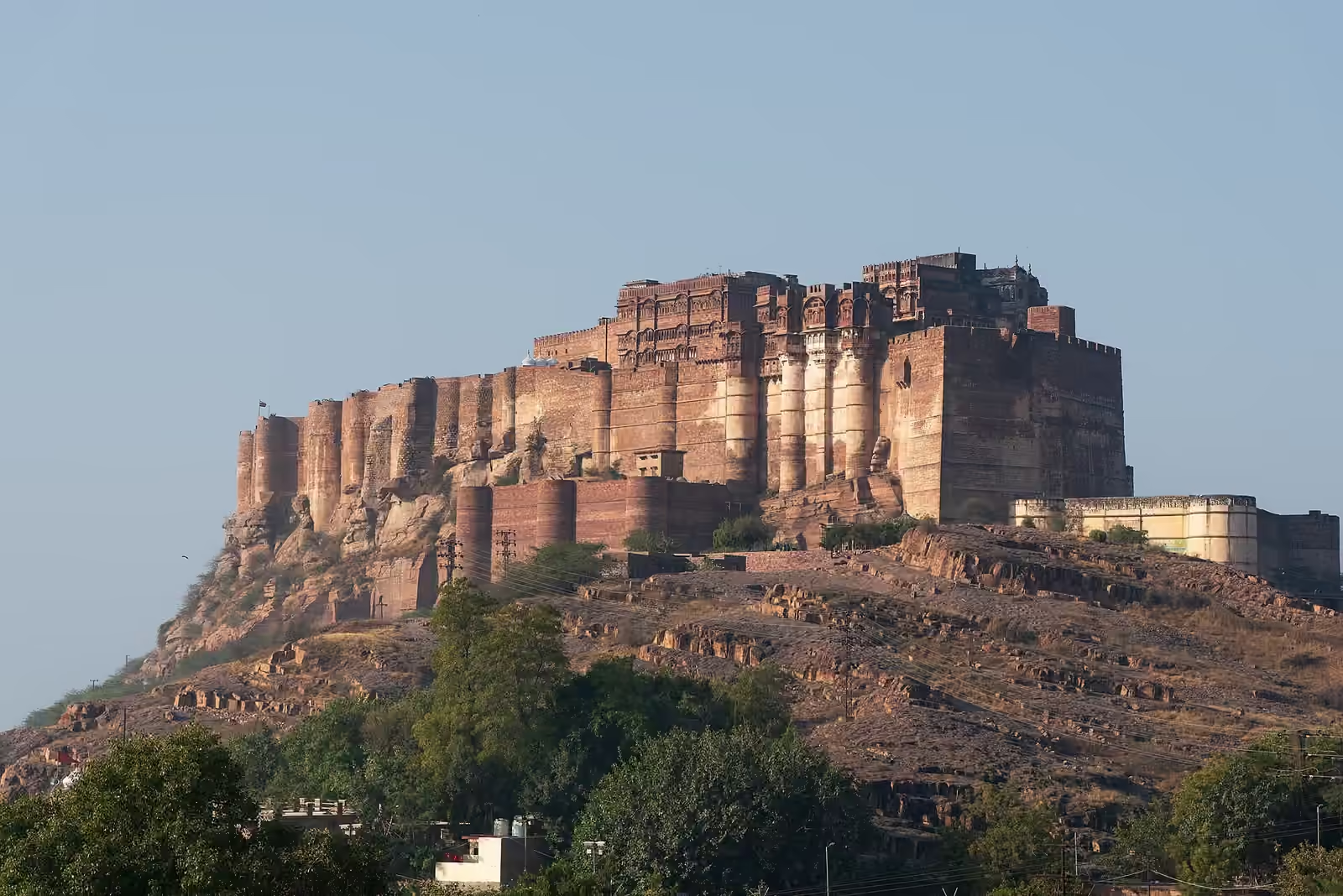
A thoughtful guide to Jaipur, Jodhpur and Udaipur, with time for the stories, craftsmanship and places between them.
Rajasthan rewards a particular kind of attention. A mirror catches the light inside an audience hall. A painted doorway reveals a court’s taste. Beyond a fortress wall, the city continues with its shops, kitchens and places of worship. The most memorable palace journey allows these details to emerge, rather than moving from one grand façade to the next.
For a first visit, Jaipur, Jodhpur and Udaipur offer a compelling progression: the planned capital of the Kachhwaha rulers, the fortified seat of Marwar, and the lakeside palaces of Mewar. Nine days gives this journey a comfortable shape. With a week, choose two bases; with twelve days, consider Bikaner or a western desert route.
These are suggestions to adapt around your interests and pace. A palace specialist may want longer in the galleries; a photographer may prefer fewer interiors and more time with the changing light.
Jaipur: a capital conceived in stone
Jaipur is more than its celebrated pink façades. Founded in 1727, its planned streets, commercial organisation and continuing craft traditions are central to its UNESCO recognition. Begin with a guide who can connect the city’s design to the life still unfolding within it. UNESCO: Jaipur City
Amber Palace lies roughly 11 kilometres from central Jaipur. Allow a morning for its sequence of courtyards, audience spaces, gardens and royal apartments. The pale sandstone and marble, and the mirror work of the Sheesh Mahal, reward close looking. Arrive with a plan for the ascent: the palace has vehicle access as well as walking approaches, but this does not remove every slope or step within it. Ask which sections suit your mobility before committing to the full circuit. Rajasthan Tourism: Amber Palace
Back in the old city, City Palace adds the human scale of court life: collections, ceremonial spaces and architecture shaped by generations of patronage. Reserve two to three hours as a planning allowance. Choose the ticket by its actual inclusions; the standard museum visit and additional tours are different products, and parts of the wider complex remain private. At the October 2026 research check, the official visitor page listed the Mubarak Mahal Textile Gallery and Museum at Night as temporarily closed. Check its notices before building a day around either. City Palace Museum: collections, visitor information
Hawa Mahal is worth understanding from both sides. Its screened windows allowed women of the royal household to observe the streets while remaining out of public view. The familiar façade is only one perspective; an interior visit reveals the relationship between the building and the city. Rajasthan Tourism: Hawa Mahal
Nearby, Jantar Mantar turns architecture into an instrument of observation. Its monumental masonry devices were designed to study celestial positions with the naked eye. A guide who can demonstrate how a shadow becomes a measurement makes this an absorbing visit, including for curious younger travellers. UNESCO: Jantar Mantar
Give these visits separate breathing space. Amber in the morning and one old-city attraction later is a more rewarding day than attempting every landmark before lunch.
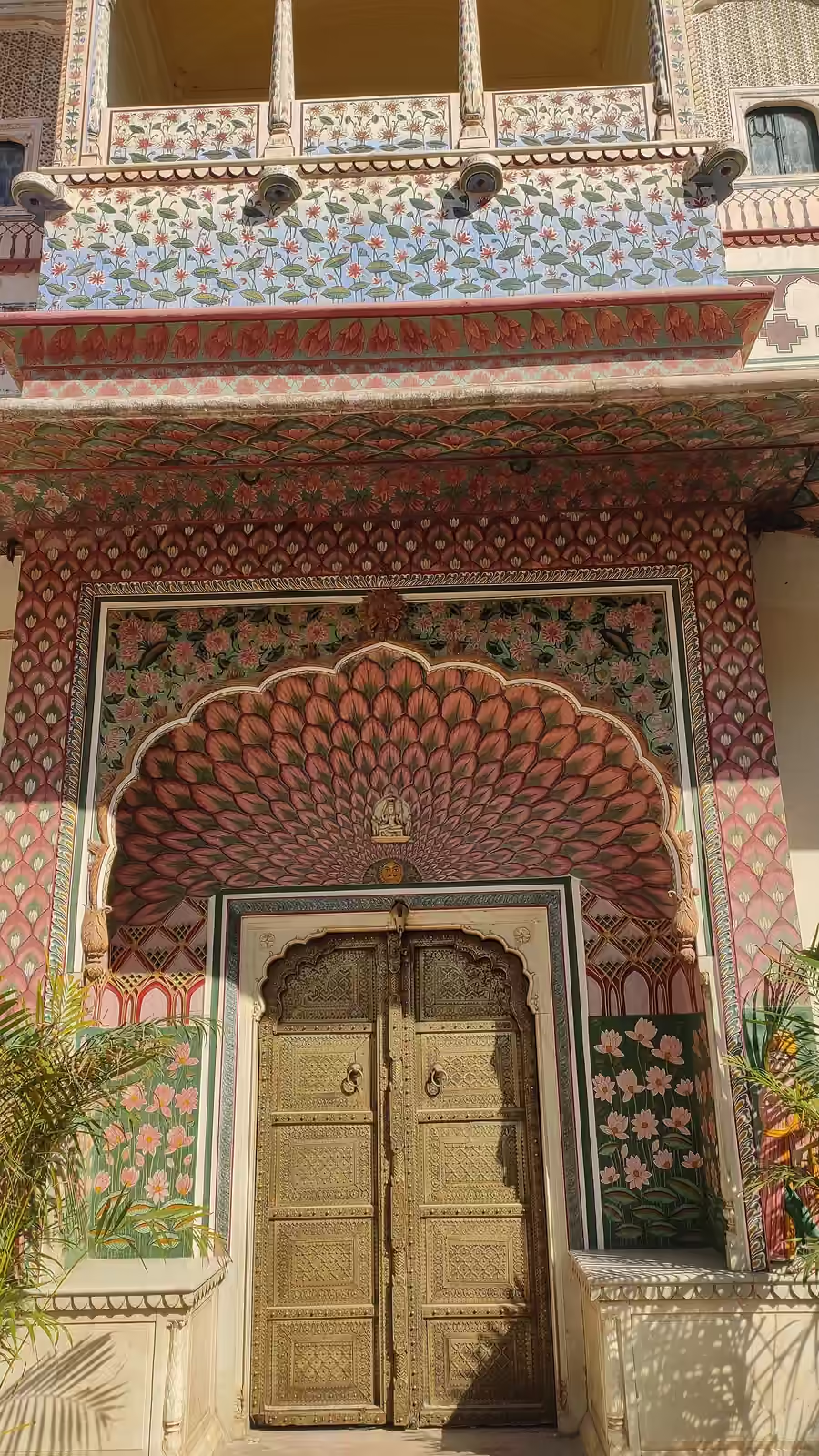
Jodhpur: the fortress and the life below it
At Mehrangarh, the approach is dramatic, but the collections deserve as much attention as the view. Palanquins, elephant howdahs, textiles, arms and paintings reveal how the court travelled, dressed and represented itself. The period rooms provide the setting; the objects help explain the people who occupied it. Allow around three hours, longer if painting or decorative arts particularly interest you. The museum offers an audio guide and lists a one-way elevator option; confirm a suitable route if stairs are difficult. Mehrangarh Museum Trust: museum and visitor information
Pair this with Jaswant Thada, the marble memorial to Maharaja Jaswant Singh II. It belongs to a funerary and devotional tradition, and should be approached with the same consideration as a sacred place. Its setting offers a gentler counterpoint to the fort. Mehrangarh Museum Trust: Jaswant Thada
Umaid Bhawan Palace introduces a different century. Built between 1928 and 1943, it remains an active royal residence and an operating Taj hotel, with a museum devoted to the palace and its history. A museum visit, a hotel stay and a dining reservation are separate arrangements. Confirm exactly what is included; museum admission should never be understood as access to guest areas or the family residence. Taj: palace history and experiences, hotel and residence
Leave an evening for a guided walk through the old city. Choose a route around your interests, keep residential doorways clear, and ask before photographing people. The living city deserves the same attention as the monuments above it.
Udaipur: palaces composed around water
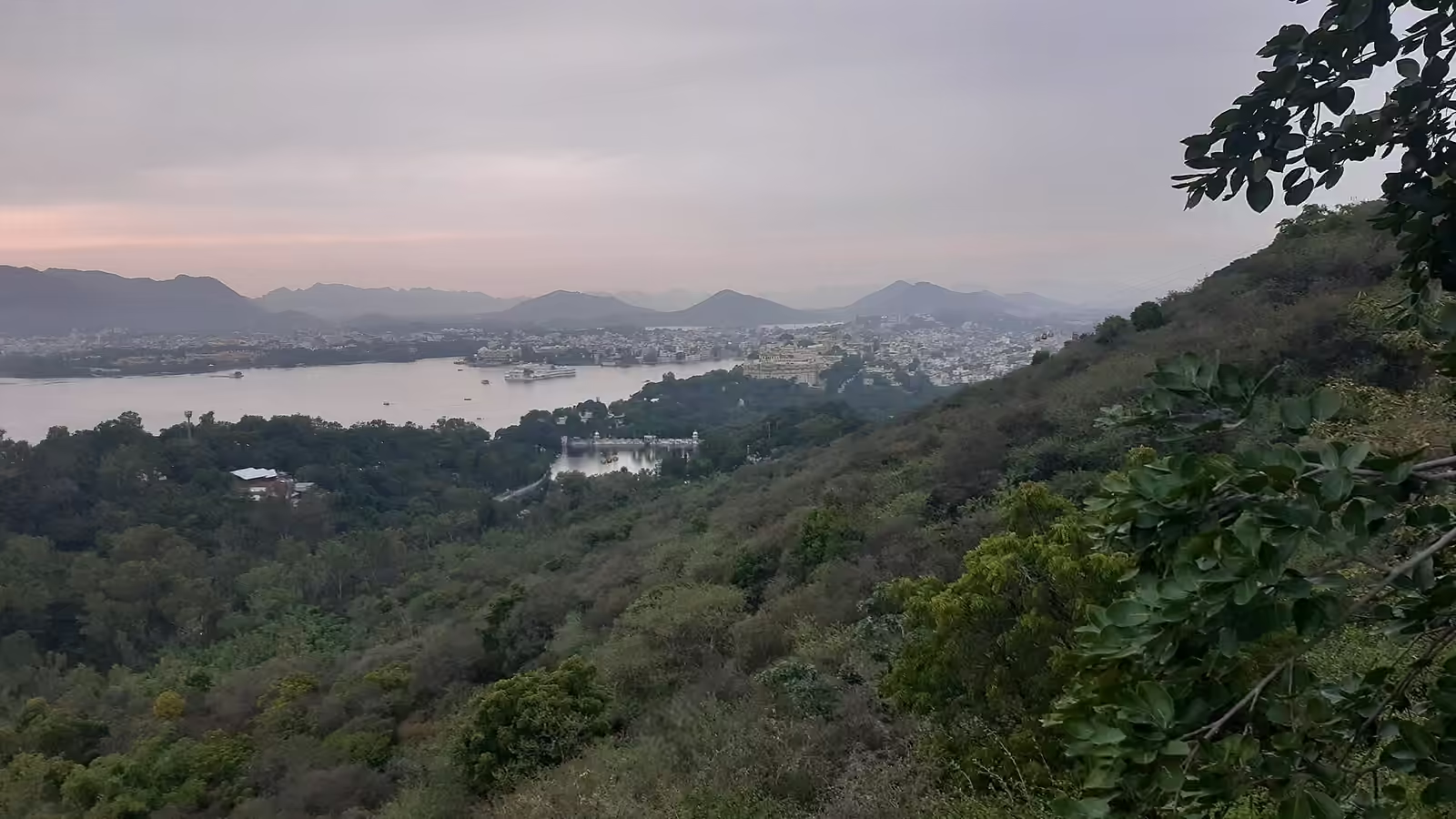
Udaipur’s City Palace Museum rewards an unhurried half-day. Look for the peacock glass mosaics of Mor Chowk, the changing textures of courtyards and rooms, and the views that continually reconnect the palace with Lake Pichola. The oldest courtyard, Rai Angan, helps place the complex in the story of Maharana Udai Singh’s capital; later additions reveal how it developed over generations. City Palace Museum: spaces and visitor planning
Follow the museum with lunch and a rest, then consider the palace from the water. A Lake Pichola boat journey offers a different reading of the shoreline and its island buildings. Confirm the departure jetty, whether the boat is shared or privately chartered, its duration, and whether an island landing is actually included. Sailing depends on conditions and the chosen operator. Rajasthan Tourism: Lake Pichola
Do not confuse Jag Mandir with Jag Niwas, the island palace now operated as Taj Lake Palace. The latter is a working hotel; its official website states that dining is for resident guests. A sightseeing boat passing it does not provide hotel admission. Taj Lake Palace: access and accommodation
An extra day here need not mean another long excursion. It can mean a second visit to a favourite quarter, time with a knowledgeable craft practitioner where an appointment is available, or simply an afternoon overlooking the lake.
Beyond the familiar circuit
Bikaner’s Junagarh Fort is a strong choice for travellers interested in interiors and decorative detail. Its palaces bring together red sandstone, marble, painted rooms and richly worked surfaces. It offers another courtly tradition rather than a repetition of Jaipur or Jodhpur. Give Bikaner two nights so that the fort and the city can be explored without arriving and departing on the same day. Incredible India: Junagarh Fort
Jaisalmer changes the geography of the journey. Its sandstone fort is part of UNESCO’s Hill Forts of Rajasthan inscription, a group recognised for fortified settlements, palaces, temples and water systems. This is living heritage: approach its lanes, homes and sacred spaces with consideration. Include Jaisalmer because the desert city interests you, and allow the extra travel it requires. It is not a short excursion from Udaipur. UNESCO: Hill Forts of Rajasthan, Rajasthan Tourism: Jaisalmer
Between Jodhpur and Udaipur, Ranakpur can make a meaningful architectural pause. Its fifteenth-century Jain temple, dedicated to Adinath, combines intricately carved marble with a spatial experience very different from the palaces. Plan a full transfer day if including it. Ask the temple about current visitor hours, dress, leather items and photography before arrival; worship determines the terms of the visit. Rajasthan Tourism: Ranakpur, Incredible India: temple and route context
Choose the length around the experience
Seven days, six nights: Jaipur and Udaipur. Spend three nights in each. Jaipur receives two full days for Amber, City Palace and the old city; Udaipur receives time for its museum, lake and a quieter day. Keep the transfer as a travel day. Compare the actual flight or rail options with a private road transfer before deciding. This is the strongest short version for travellers who value a settled pace.
Nine days, eight nights: Jaipur, Jodhpur and Udaipur. Stay three nights in Jaipur, two in Jodhpur and three in Udaipur. A natural sequence is Jaipur on days one to three, transfer on day four, Jodhpur on day five, transfer towards Udaipur on day six, then two full days before departure. Ranakpur can be considered on day six if the visiting window and your energy allow.
Twelve days, eleven nights: add depth or choose the west. For palace variety, use Jaipur for three nights, Bikaner for two, Jodhpur for two and Udaipur for four. Alternatively, make a western journey of Jaipur, Bikaner, Jaisalmer and Jodhpur, allocating three, two, three and three nights respectively. This second version deliberately leaves Udaipur for another journey. Including every city comfortably calls for more time.
International arrival and departure days are part of these counts. If you land late, protect the following morning; do not treat an overnight flight as a full night’s rest.
Distances deserve a place in the design
For orientation, Jaipur–Jodhpur is roughly 350 kilometres; Rajasthan Tourism lists Jodhpur–Udaipur at 257 kilometres and Jodhpur–Jaisalmer at 286 kilometres. These are city-to-city indications, not precise hotel-to-hotel distances. Incredible India: Jaipur–Jodhpur, Rajasthan Tourism: Jodhpur connections
Our suggested planning allowances are six to seven hours for Jaipur–Jodhpur, five to six for a direct Jodhpur–Udaipur journey, and five to six for Jodhpur–Jaisalmer, including reasonable breaks. These are estimates, not guaranteed journey times. A Ranakpur stop makes the Udaipur transfer a full day. Exact hotels, road conditions and sightseeing detours alter the calculation. Finish in the most convenient departure city rather than automatically retracing the route.
Season, comfort and access
October to March is generally the most comfortable period for this circuit. Winter evenings can be cold, particularly in the desert. April to June brings serious heat; outdoor visits need early starts and substantial indoor breaks. The monsoon offers a greener landscape, especially around Udaipur, but requires more flexibility around rain. RTDC: seasonal guidance
Choose hotels for the journey you want: location, quiet, room layout, reliable cooling, convenient vehicle access and time to enjoy the property. A famous palace address and a contemporary hotel with a palace view offer different experiences. Ask about steps and bathroom access in the specific room category, rather than assuming a heritage property’s accessibility from its overall description.
The same care applies to monuments. Udaipur’s museum provides wheelchairs, a lift and other assistance, but acknowledges that narrow stairs and changes of level prevent access to every area. Share mobility needs before the visit and agree a satisfying route, including rest points. City Palace Museum: accessibility FAQ
Photography rules also vary by space and purpose. Udaipur permits visitor photography but prohibits flash in galleries; professional and commercial work requires permission. Ask separately about tripods, filming and any equipment beyond a handheld camera. Never assume a ticket covers a professional shoot, or photograph worshippers without their agreement. City Palace Museum: photography FAQ
For tickets, begin with the venue’s own visitor page: Jaipur City Palace, Mehrangarh Museum and Udaipur City Palace Museum. For state-run Jaipur monuments, consult the Rajasthan Department of Archaeology and Museums. Check ticket categories, current closures and identification requirements before purchase. Avoid relying on an old quoted price or assuming one composite ticket covers independently managed palaces.
The journey becomes personal when the choices become specific: an interest in astronomy, miniature painting, textiles, architecture or living traditions; a preference for early mornings or long lunches; the desire to explore every gallery or simply linger in a beautiful place. Begin with those details, and let the route take shape around them.
Research checked 24 October 2026. Visiting arrangements can change; confirm them for your travel dates.
Compose your own palace journey
Explore our Rajasthan Palaces Signature Journey and palace experiences. Compare Exceptional Hotels or combine Rajasthan with the Golden Triangle. Speak with AUREL about your journey.
In photographs
Your perspective
A first-party cookie remembers your reaction.
Join the conversation
Loading comments…
Comments are closed for this story.