Taj Mahal Travel Guide: Beyond the First Glimpse
A considered guide to the Taj Mahal: tickets, visiting times, night viewing, marble artistry and the Mughal places that make Agra worth a longer stay.
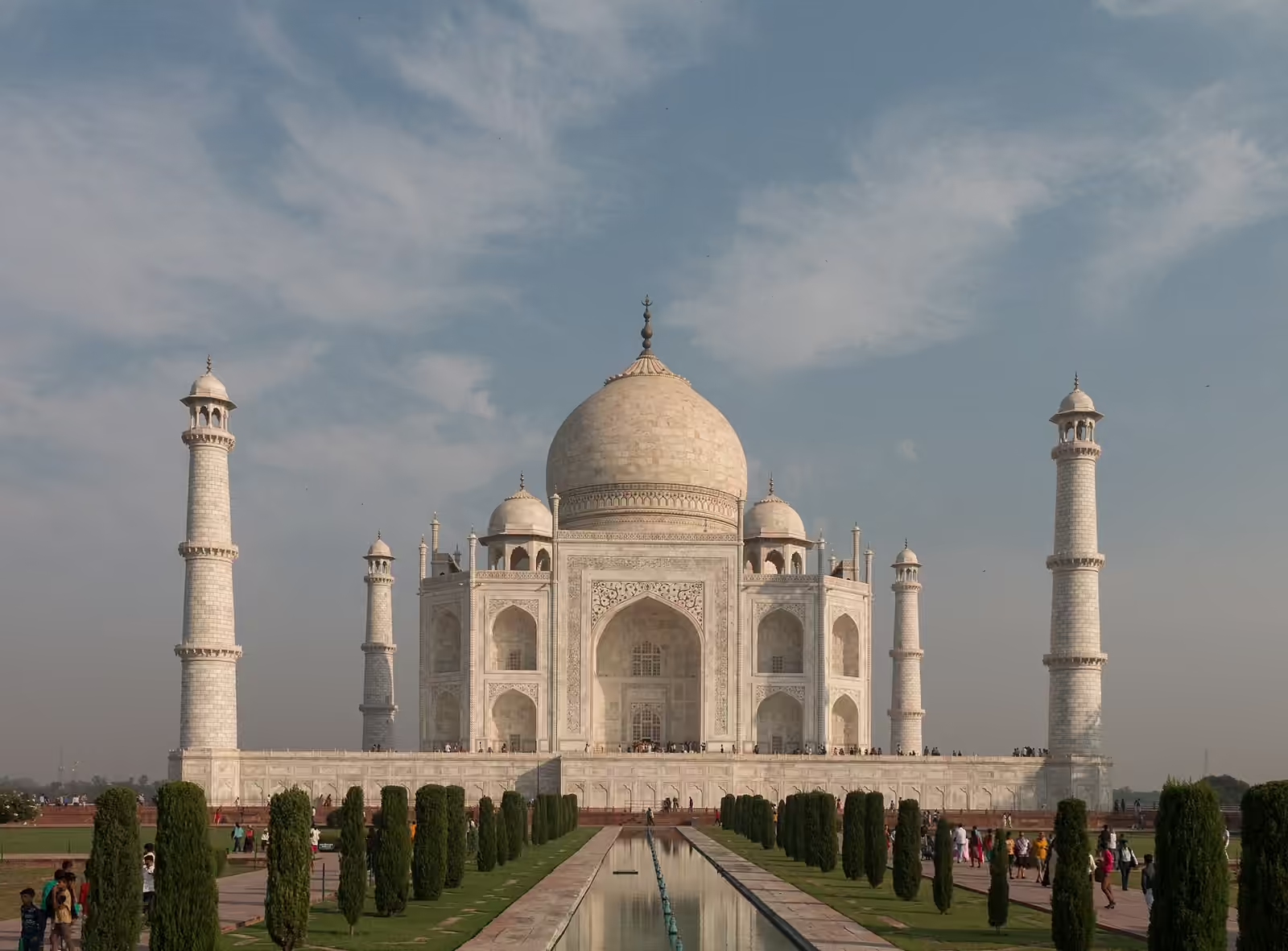
The Taj Mahal deserves more than the interval between two transfers. Its scale becomes clearer as you walk towards it; its workmanship becomes clearer when you stop looking at the whole building. A well-planned visit gives you room for both, with the practical decisions settled before you arrive.
For a first journey, we recommend two nights in Agra. That leaves space for the Taj, Agra Fort and a quieter encounter with the city’s Mughal inheritance. Add another night if Fatehpur Sikri, decorative arts or a particularly gentle pace matter to you. These are suggested rhythms, to be shaped around your arrival, interests and mobility.
Choosing your time
The Taj Mahal normally opens 30 minutes before sunrise and closes 30 minutes before sunset. It is closed on Fridays for general sightseeing. Build the Agra portion of your journey around the actual visiting day before arranging hotels or onward travel. Official opening information.
An early visit gives you the rest of the day to use lightly. It does not guarantee an empty monument or clear skies. If dawn photography is important, look at the forecast and allow flexibility for visibility rather than treating sunrise as a promised spectacle.
October to March is the season recommended by Agra’s tourism authorities. Winter mornings can feel cold; warmer months require a much gentler approach to outdoor sightseeing. Choose breathable clothing, a useful sunhat and footwear comfortable for sustained walking, and leave room for a proper break afterwards. A later visit can suit guests who prefer a slower morning, provided there is sufficient time before closing. Agra district climate guidance.
Understanding what you are seeing
Shah Jahan commissioned the mausoleum in memory of Mumtaz Mahal. Construction began in the 1630s; the main tomb was completed in 1648, with other elements of the complex completed subsequently. UNESCO records artisans working across many disciplines, drawn from the empire and from Central Asia and Iran. The familiar account of royal love is one part of a larger history of skilled labour, patronage, faith and architectural exchange. UNESCO’s account of the Taj Mahal.
Notice where the tomb stands: at the river end of the four-part garden, rather than its centre. The long approach, water channels and repeated divisions make the building’s position unusually powerful. The red sandstone structures beside it sharpen the effect of the white marble.
Inside are the ceremonial cenotaphs of Mumtaz Mahal and Shah Jahan; the actual graves lie in a lower chamber. The emperor’s cenotaph was added later, beside hers. Do not assume that a standard visit includes the crypt or surrounding closed rooms. The official guide to the interiors.
What rewards a closer look
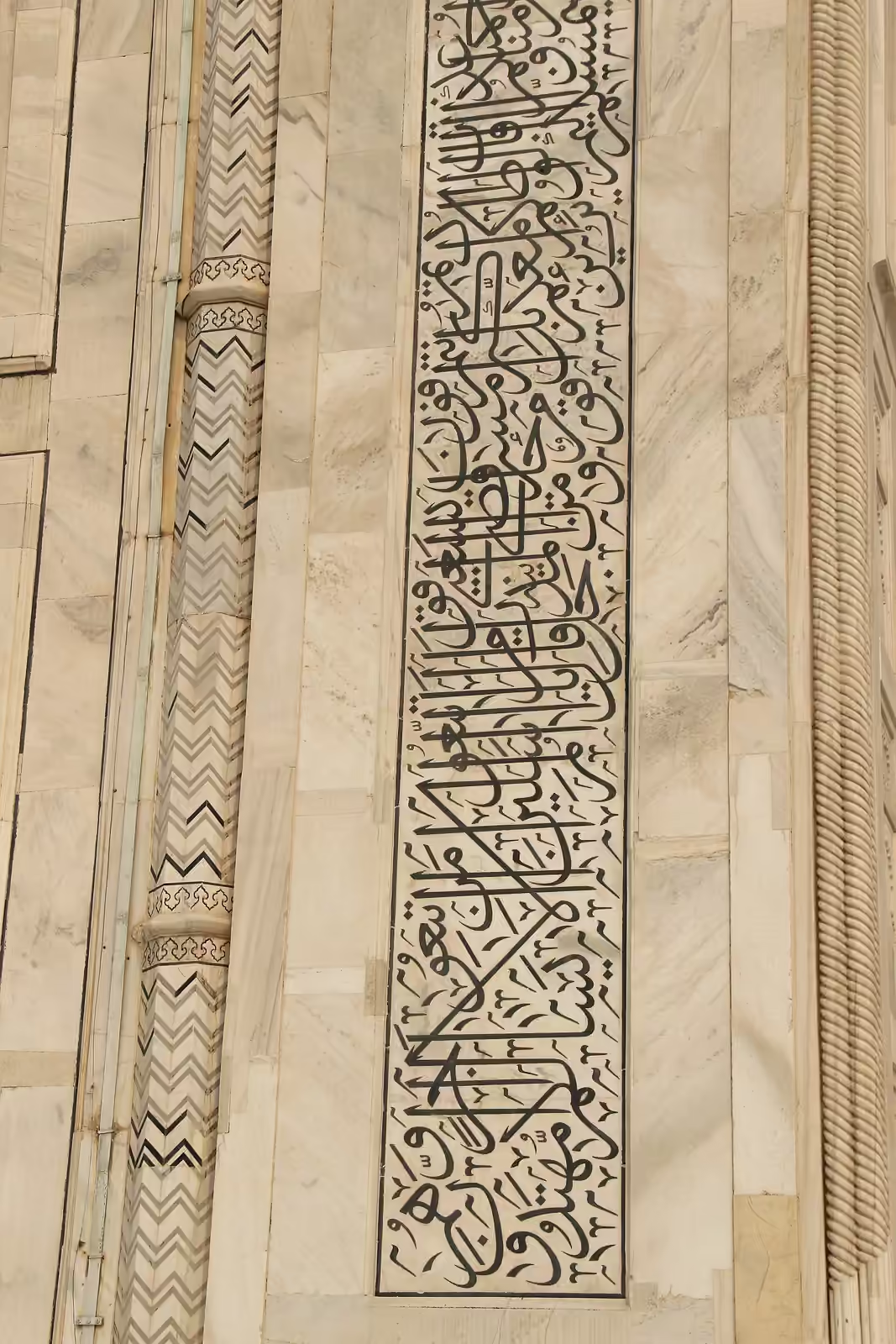
Begin at the great gateway rather than rushing through it for the photograph. Its inscriptions and floral ornament establish themes that continue across the complex. Look at the relationship between the monumental lettering and the architecture around it. A knowledgeable guide can help distinguish the calligraphy, carved marble and coloured stone inlay instead of describing them all simply as decoration. The gateway, the calligraphy.
At the mausoleum, give attention to the flowers as individual compositions and to the pierced marble screens. Move between the distant view and the close detail: the same building can be understood as a carefully balanced silhouette and as thousands of small decisions made by craftspeople.
If objects and drawings interest you, ask about the Taj Museum. ASI describes displays including architectural plans, historical paintings and examples of decorative materials. Confirm its opening time separately; an early monument visit does not automatically coincide with museum hours. ASI’s Taj Museum information.
Tickets, nationality categories and identification
The dedicated Taj Mahal visitor page publishes these daytime reference rates in Indian rupees:
- Other foreign visitors: ₹1,100, plus ₹200 if visiting the main mausoleum.
- Citizens of SAARC and BIMSTEC countries: ₹540, plus ₹200 for the main mausoleum.
- Indian citizens and OCI cardholders: ₹50, plus ₹200 for the main mausoleum.
The published table describes the base rates as including ASI and Agra Development Authority charges. Online discounts may apply. Use the price and category shown in the official checkout for your date; these figures are admission charges, not the cost of a guided visit or an AUREL journey. Official tariff and category information.
Daytime entry is free for children below 15, according to the official ticket information. Include children when making arrangements and verify any required child ticket or mausoleum selection. Carry government-issued identification; international guests should have the passport used for their booking, with OCI documentation where relevant. Check names, nationality, date and the selected monument before paying. Official ticketing guidance.
Begin booking through the official ASI portal, reached from government visitor information. Keep the confirmation available offline. Follow the entry window and permitted visiting duration on your issued ticket: planning a leisurely visit does not mean admission is unlimited or allows repeated entry.
Reaching Agra and choosing a gate
Agra can be reached from Delhi by road or rail, and is part of the Delhi–Agra–Jaipur Golden Triangle. Select the transfer around your wider itinerary, not a headline journey time. Road travel offers flexibility for stops; rail travel requires a separate station transfer at both ends. Verify the actual station, service and date through IRCTC, as recommended by the official transport guide.
A same-day return from Delhi can work for a focused visit, but an overnight stay makes the morning less dependent on a long transfer. Avoid attaching a tightly timed international departure to a road return from Agra.
The East and West Gates provide visitor entry; the South Gate is currently closed for entry. Agree a gate, meeting point and collection plan with your driver or guide before leaving the hotel. The right gate is the one that fits your arrangements, rather than a promise that one entrance is always quiet. Official gate information.
Petrol and diesel vehicles cannot approach within 500 metres of the monument. Allow for the final approach and security, even when travelling with a private driver. The district administration lists battery transport from the parking areas and wheelchair availability at the gates; confirm the arrangements you need rather than assuming a vehicle can reach the entrance itself. Agra district visitor facilities.
Pack lightly and photograph thoughtfully
Take a small, simple bag. The published restrictions prohibit food, smoking materials, alcohol, headphones, chargers and tripods, among other items; water bottles are permitted. Leave unnecessary equipment and luggage at your accommodation. Ask in advance about essential medical supplies or a child’s particular needs instead of discovering a security problem at the gate.
Photography is prohibited inside the main mausoleum, and drones are prohibited in and around the Taj Mahal. Keep your phone silent and your voice low. Do not touch the stonework or lean against delicate surfaces for a photograph. Official visitor rules.
Outside, leave space for other people to stop and look. The central view is only one possible composition: gardens, architectural frames and details can be equally rewarding. A photograph should not require blocking a path or asking other visitors to surrender their experience. Hire approved guides or photographers who show identification, and agree scope and price beforehand.
Comfort, mobility and travelling with children
Wheelchair provision is helpful, but it should not be read as a guarantee that every threshold, terrace or interior can be reached in the same way. Before confirming the visit, describe walking tolerance, steps that are difficult, transfer needs and any assistance required. Ask for a specific route from the parking point through security and back, including the mausoleum approach if that is part of your ticket. Agra district information on visitor facilities.
For children, a few things to notice often work better than an exhaustive explanation: a flower in the stone, a reflection, the difference between the red gateway and the white tomb. Arrange food before or after entry, and consider whether a very early start will improve the day for your particular family. Keep the next appointment flexible enough to allow everyone to rest.
Night viewing: a separate experience
Night viewing normally takes place around the full moon: the full-moon night and two nights on either side, excluding Fridays and the month of Ramzan. It requires a separate ticket and a short assigned session; it is not an evening extension of ordinary daytime admission. The official information describes 30-minute viewing batches and reporting at Shilpgram 30 minutes before the booked time. Official night-viewing information.
Published night rates distinguish children from daytime admission: the tourism page lists ₹750 for foreign adults, ₹510 for Indian adults, and ₹500 for children aged 3–15. Confirm the applicable age category and current total when booking.
Official pages currently differ on the overall clock-time window and booking procedure. Follow the live booking system and your issued ticket, and reconfirm the reporting point. Do not plan around an old screenshot of a timetable. Visibility depends on conditions, and night viewing should complement, rather than replace, a daytime visit. Equipment restrictions are also tighter at night; check them before leaving your hotel. ASI visitor information.
Agra beyond the Taj
Agra Fort gives the clearest companion story: the workings of an imperial court, with red sandstone and later marble architecture. Plan a separate visit rather than treating it as a brief stop between lunch and a train. The district administration lists it as open throughout the week, making it a useful Friday option. Agra Fort visitor information.
Itimad-ud-Daulah’s tomb rewards an interest in detail. Built for Nur Jahan’s father, it offers another setting in which to study marble, inlay and pierced screens. Its smaller scale makes it a useful contrast to the Taj. Resist reducing it to its tourist nickname, “Baby Taj”; it has its own patrons, history and design. Official monument description.
Mehtab Bagh gives a view from the opposite bank of the Yamuna. It is a separate garden visit reached by road, not a second entrance into the Taj complex. ASI’s archaeological account identifies evidence for a garden, rather than proof of the often-repeated “Black Taj” story. Allow for the transfer and the garden’s closing time. ASI’s Mehtab Bagh account.
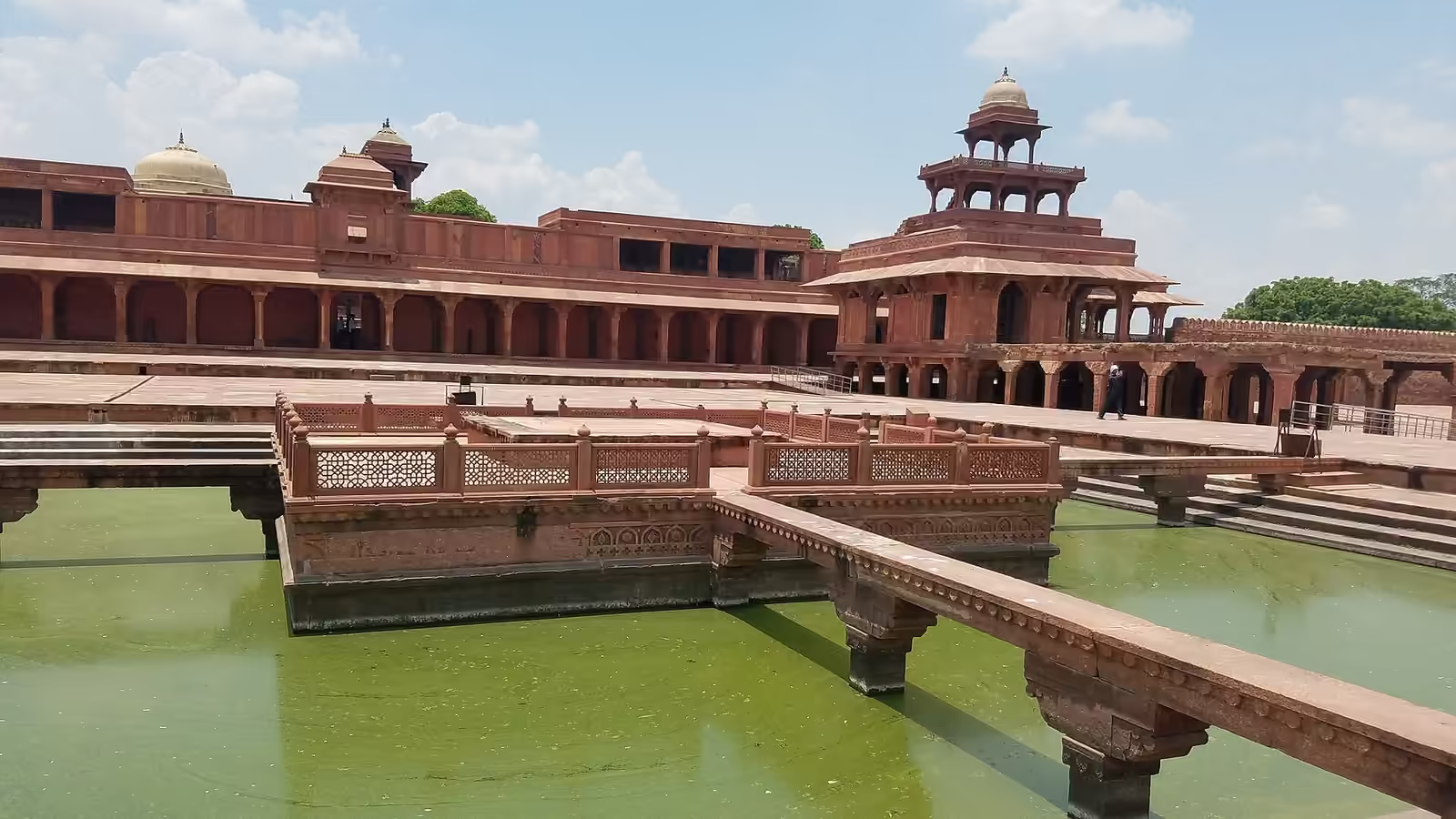
Fatehpur Sikri, roughly 40 kilometres from Agra, deserves a substantial half-day allocation, including travel. Akbar’s former capital brings palaces, audience spaces and religious buildings together in a distinctive sandstone ensemble. The mosque and shrine remain places of religious significance: ask about appropriate dress and conduct, and let the visit move at a respectful pace. UNESCO’s account of Fatehpur Sikri, official access information.
A comfortable two-night rhythm
Arrive in Agra on the first afternoon, settle in, and choose one modest outing if you feel ready. Visit the Taj the following morning, return for breakfast or a rest, then decide whether Agra Fort suits the afternoon. On departure day, choose Itimad-ud-Daulah or a relaxed morning before continuing.
For Fatehpur Sikri, add a night or give it a clearly allocated transfer day towards Jaipur. Avoid squeezing it between a complete Taj visit and a fixed onward departure merely because all three fit on a map. Guests particularly interested in Mughal history can begin with Humayun’s Tomb and Old Delhi, then continue through Agra and Fatehpur Sikri; those seeking a broader first introduction to northern India can add Jaipur.
Before finalising, share your preferred pace, photography interests, appetite for detailed history, and any mobility or family requirements. Then agree the visiting day, admissions, guide language, transport, breaks and meeting points. Careful preparation leaves the monument itself room to hold your attention.
Planning details checked 24 October 2026. Admission conditions and operating arrangements can change; confirm them through the linked official sources for your dates.
Let the history shape your journey
Explore Taj Mahal & Mughal Heritage, or connect Agra with Delhi and Jaipur through our Golden Triangle Travel Guide. Discover the Taj Mahal experience, then begin a conversation with AUREL.
In photographs
Your perspective
A first-party cookie remembers your reaction.
Join the conversation
Loading comments…
Comments are closed for this story.